Introduction
Polyimide, commonly known as Kapton film, is a high‑performance material widely adopted in consumer electronics, battery modules, FPC flexible circuits and precision devices. It delivers excellent heat resistance, electrical insulation and chemical stability.
We supply both standard full‑roll polyimide silicone adhesive tape and custom converted finished die‑cut parts. Off‑the‑shelf tapes cannot be directly used for most complex electronics assemblies. Custom‑shaped PI components require full in‑house workflow: raw material preparation, laminating, high‑precision die‑cutting, dimension validation and final packaging.
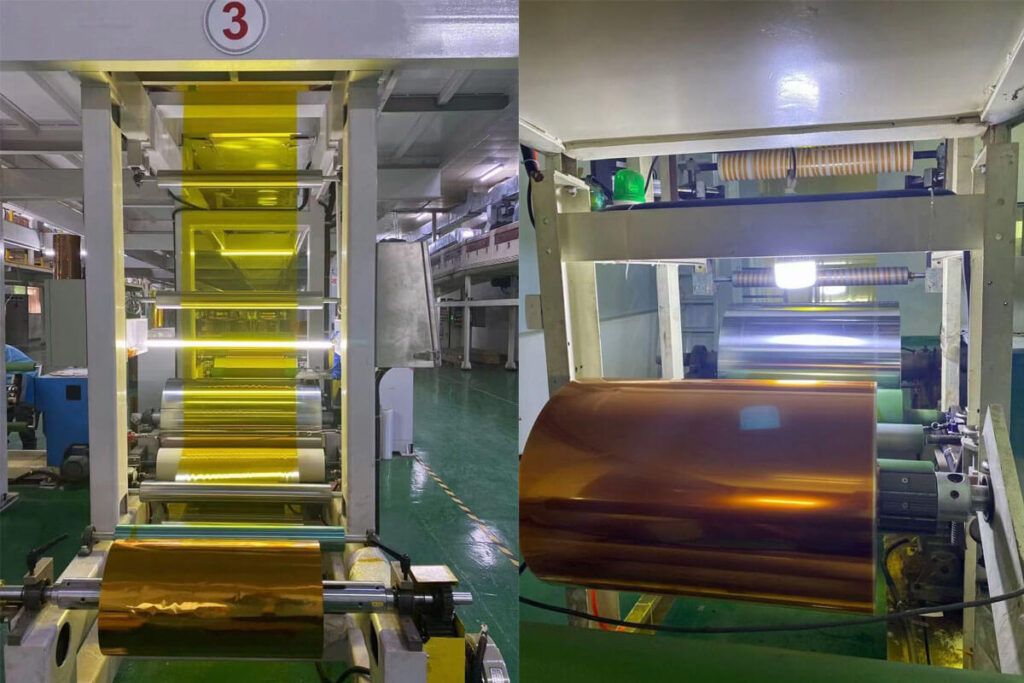
This article walks you through our full in‑house manufacturing workflow, covering raw roll production, drawing review & tooling fabrication, die‑cut conversion, dimensional inspection and export‑ready packaging.
Part 1: Raw Material & Full‑Roll Polyimide Adhesive Tape Manufacturing
Many customers source full‑roll polyimide adhesive tape for their own in‑house processing, before any secondary die‑cut conversion. Beyond custom die‑cut components, we also produce complete silicone‑based PI adhesive tape in‑house.
We start with premium base polyimide film substrates. Silicone adhesive is uniformly coated onto Kapton film according customer specifications. The adhesive layer is then laminated with PET release liner and goes through controlled curing to stabilize bonding performance. Key parameters including adhesive thickness, total film thickness and tape width can be fully customized for your project.
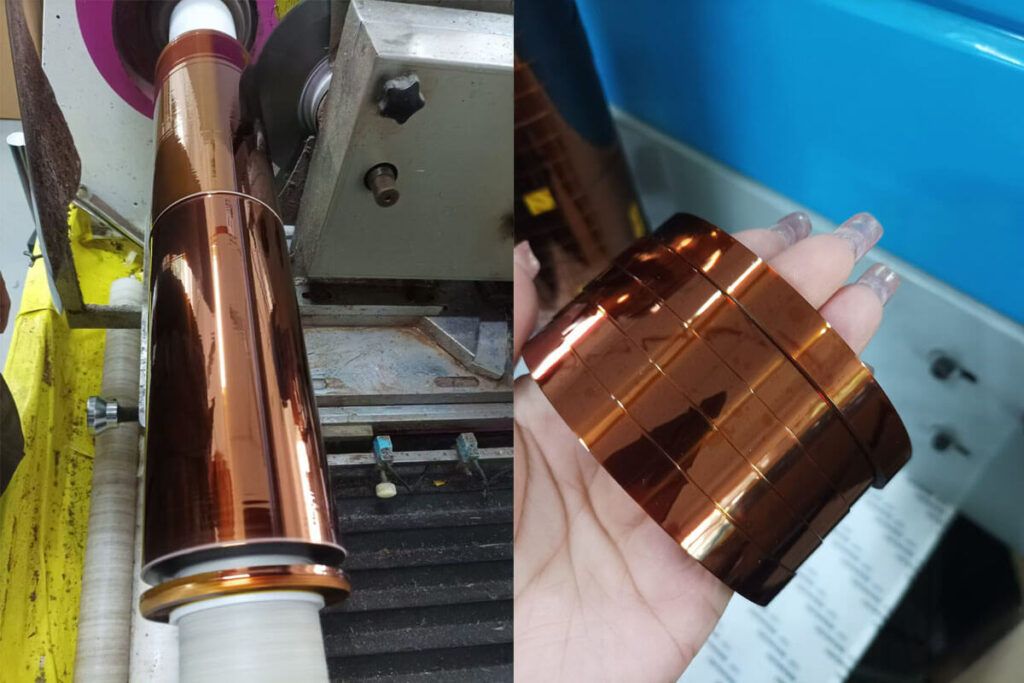
Finished master wide rolls are then slit into target widths for full‑roll orders. Every batch undergoes strict incoming inspection for peel adhesion strength, high‑temperature resistance and surface cleanliness. Material test certificates are available for full traceability.
Full‑roll polyimide tape can either be delivered directly to customers, or fed into our die‑cut workshop for further custom‑shape conversion. Whether you require bare roll material or finished die‑cut components, all manufacturing steps are completed under one roof.
Part 2: Precision Die‑Cutting for Miniature Polyimide Components
Miniature polyimide insulation and masking parts are heavily used within FPC, SMT reflow and semiconductor assemblies. These small‑format parts demand tight dimensional tolerance down to ±0.1 mm. Tiny burrs, dimension drift or layer mis‑registration may lead to short‑circuit risk or contamination on gold‑plated contact surfaces.
2.1 Drawing Confirmation & Tooling Preparation
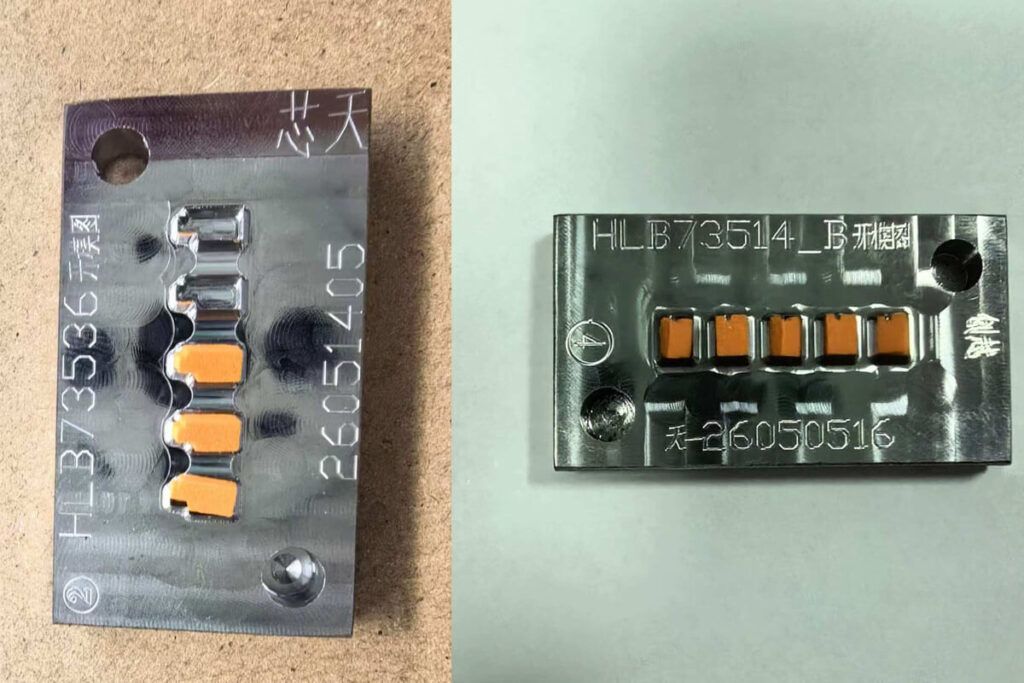
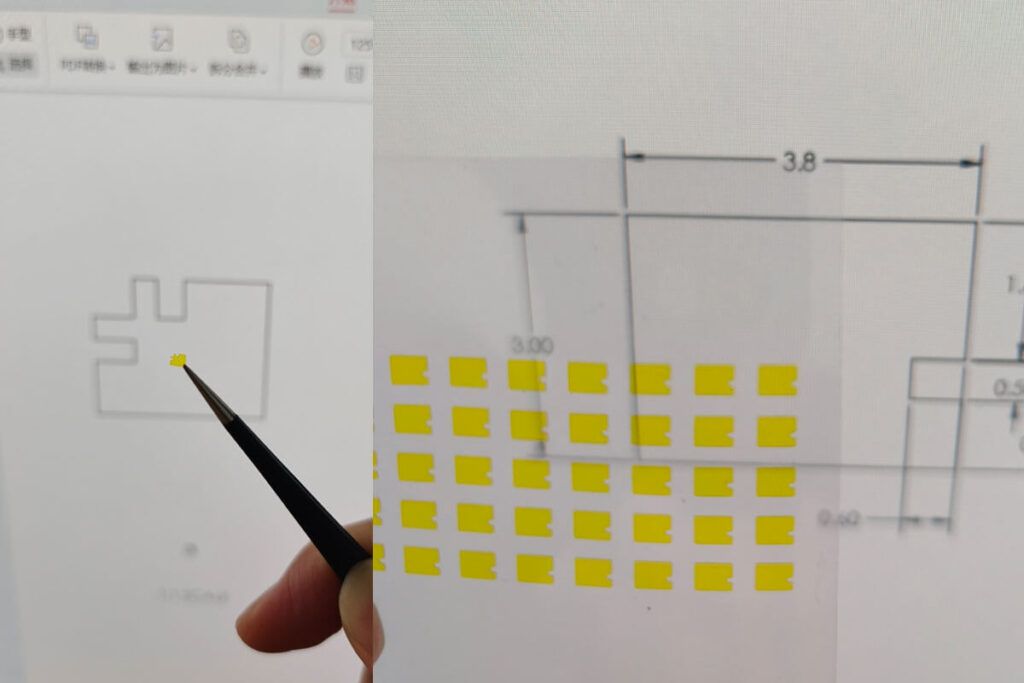
Every custom conversion project starts with customer engineering drawings (DWG / DXF / PDF). Our engineering team reviews part contours, cut‑out notches, critical dimensions and tolerance requirements.
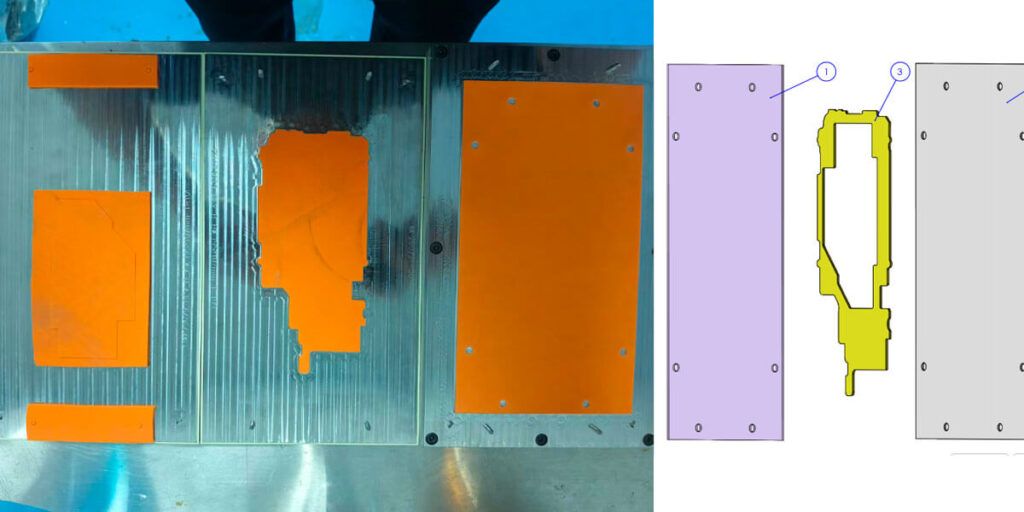
Based on approved drawings, high‑precision steel cutting dies and positioning fixtures are manufactured. The accuracy of tooling directly determines final finished‑part quality. Fixture jigs are used for pre‑production sample verification to confirm fitting performance before mass run.
2.2 Flat‑Bed Die‑Cutting Process
Prepared laminated PI material runs through high‑precision flat‑bed die‑cut equipment. In one single press stroke, hundreds of complex‑shaped PI parts are punched onto the PET carrier release liner, while waste matrix is automatically stripped away.
For multi‑layer composite constructions, special multi‑stage compound dies are applied. Different cutting depths are programmed: full through‑cut for polyimide functional layer, and half‑cut for PET liner without piercing through the carrier backing.
3D tool simulation is completed prior to actual machining. Even minor tool offset will generate defective parts, so pre‑run tool validation is mandatory.
2.3 Mass Production on Automatic Die‑Cut Line
Laminated PI‑PET roll stock feeds continuously into high‑speed die‑cut equipment. This integrated workflow completes depth‑controlled cutting, waste stripping and positioning hole punching in one continuous pass.
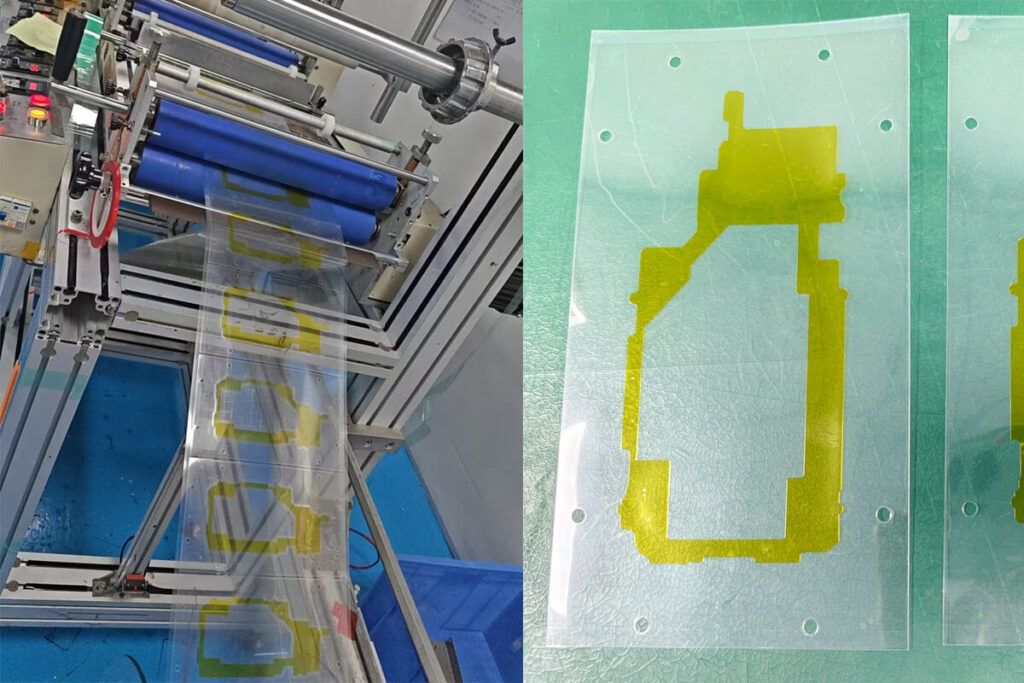
Operators closely monitor cutting depth: over‑depth will damage the PET carrier liner; insufficient depth leaves parts still connected to waste matrix. After processing, finished complex polyimide outlines remain neatly attached to transparent PET release liner, ready for downstream inspection.
2.4 Dimensional Verification for Multi‑Layer Die‑Cut Parts
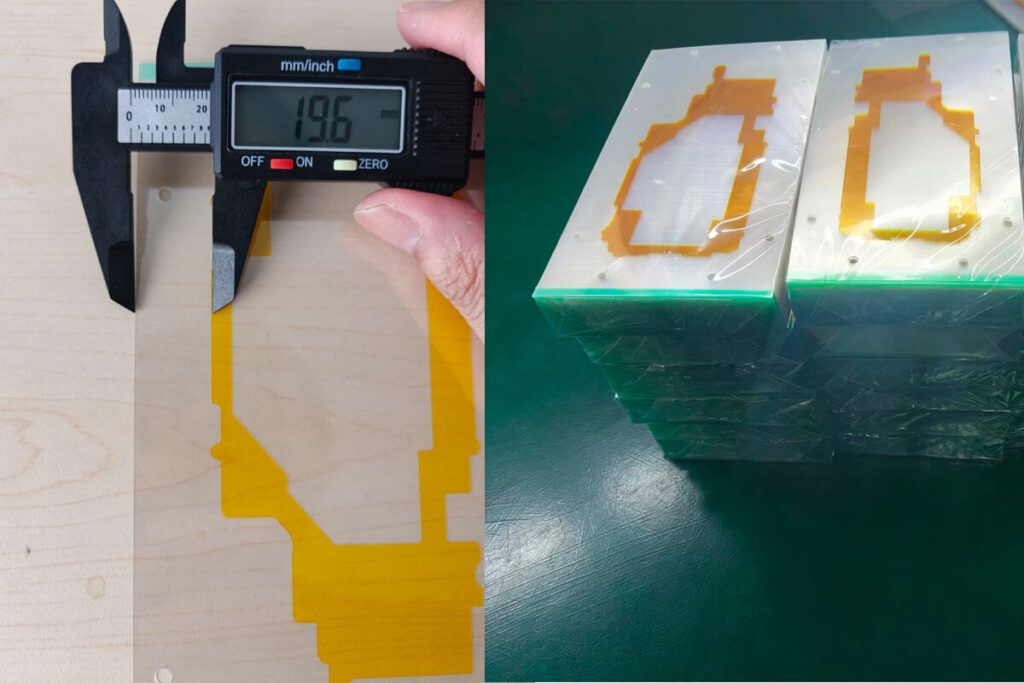
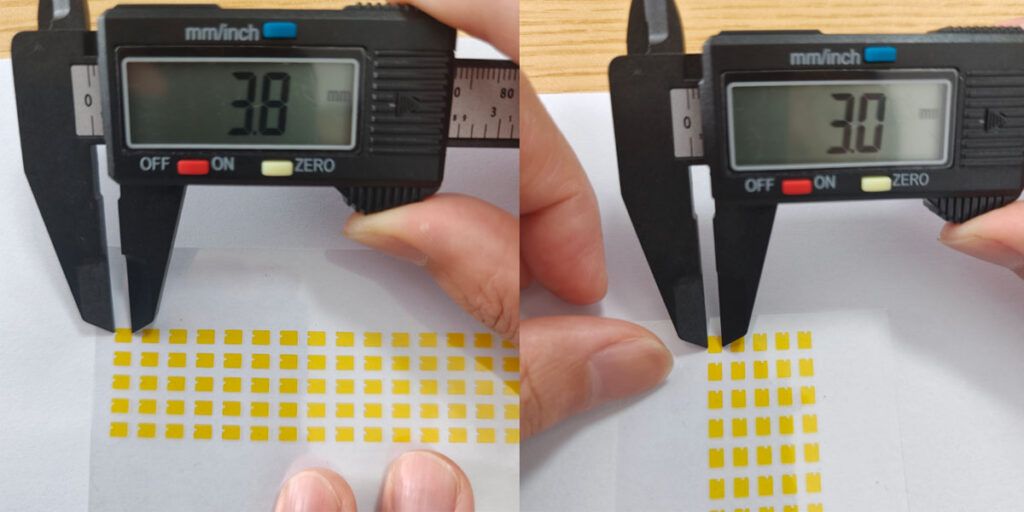
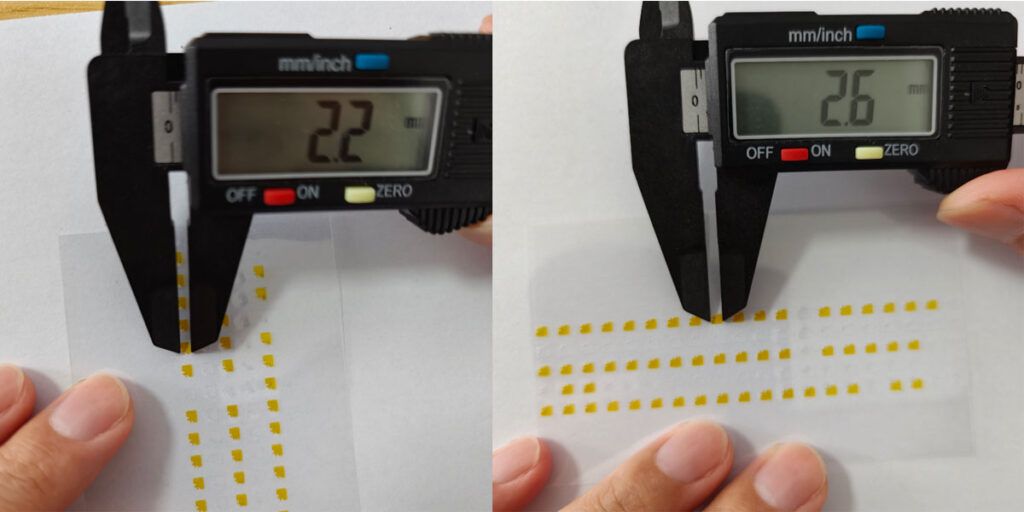
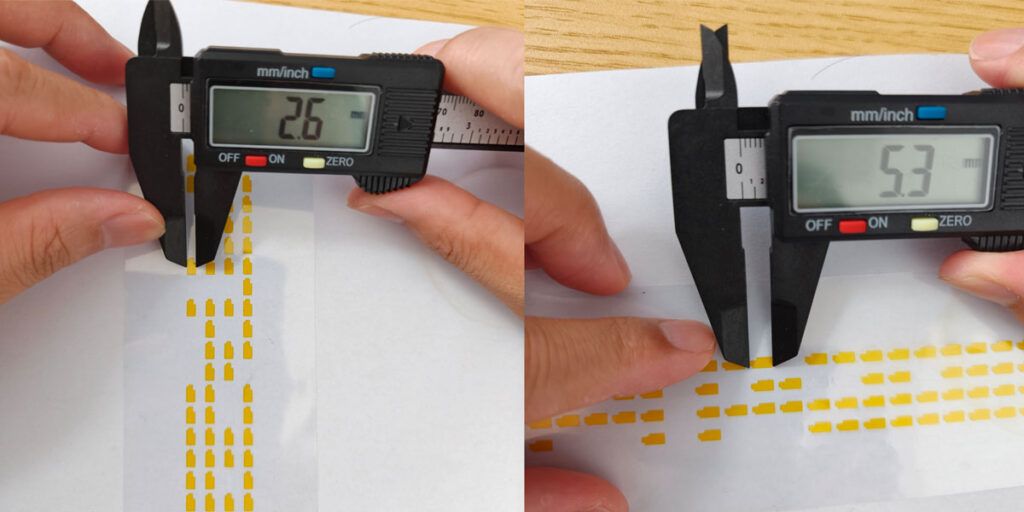
Tension variation and minor material shrinkage during processing may introduce subtle layer shift for composite multi‑layer parts. We utilize digital calipers and optical inspection tools to verify outer dimensions and critical feature sizes of finished samples. This step confirms there is no layer mis‑registration, notch deformation or outline deviation. Pre‑production prototype testing on your actual FPC hardware is highly recommended.
2.5 Finished‑Goods Sorting & Export‑Ready Shipping Packaging
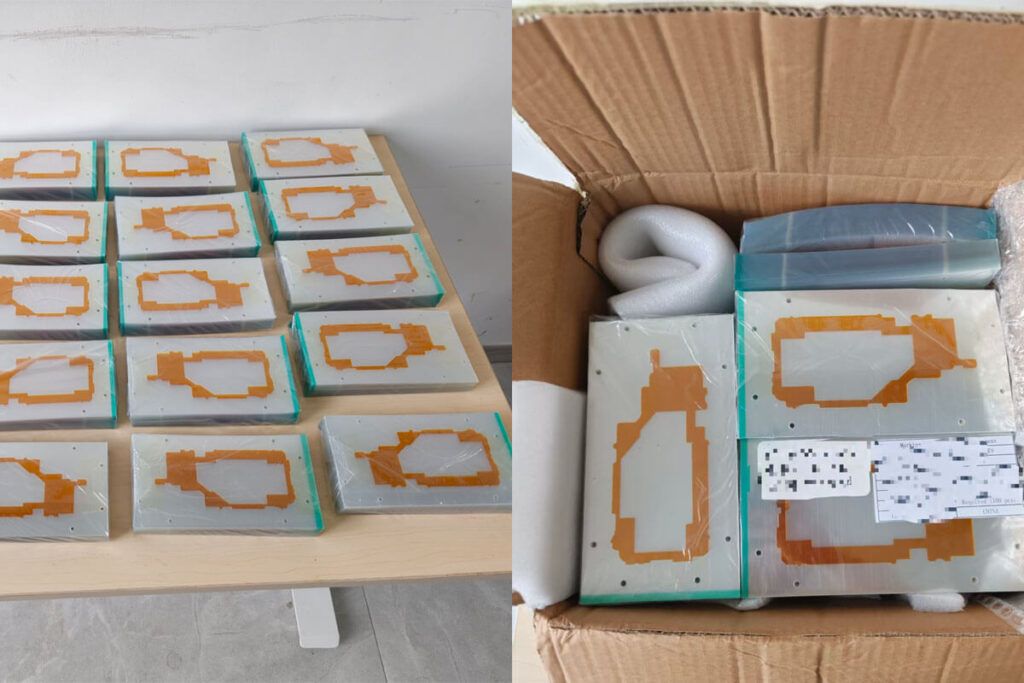
Qualified die‑cut sheets are individually protected. Parts stay intact on PET release liner to avoid scratching, dust contamination and layer separation. Sheets are neatly stacked before final packing.
For international export shipments, finished goods are packed with foam cushion inside carton boxes to prevent shifting and mechanical damage in transit. Shipping labels include part number, quantity and origin information for easy traceability.
Core competence note: Custom PI converting is more than simply cutting shapes. It combines precision tool engineering, depth‑controlled multi‑layer cutting, layer‑alignment control and rigorous quality inspection, delivering defect‑free composite parts ready for your SMT and manual assembly lines.
Why Choose Custom Die‑Cut Polyimide (Kapton) Parts
- ✅ High‑temp performance: Stable under SMT peak reflow temperature up to 260 °C, no carbonization or melting
- ✅ Residue‑free peeling: Silicone‑system adhesive leaves minimal contamination on gold‑finger and sensitive contact surfaces
- ✅ Ultra‑precision geometry: Strictly follows your CAD drawing, tolerances down to ±0.1 mm for miniature components
- ✅ Flexible output format: Sheet format, long strip format or roll format available, adapt for manual pick‑and‑place or semi‑auto assembly jigs
- ✅ Material options: Standard industrial Kapton, anti‑static / ESD‑grade polyimide film on request
- ✅ Full‑chain service: In‑house tape laminating, tooling fabrication, prototyping and mass‑volume production
Typical Application Scenarios
- FPC gold‑finger masking for SMT solder reflow process
- Gold‑contact protection during conformal coating, potting and plating
- PCB & flexible circuit high‑temperature temporary insulation & masking
- Battery module internal electrical insulation spacer parts
- Semiconductor assembly thermal‑resistant shielding components
Conclusion
Polyimide (Kapton) film remains irreplaceable for high‑temperature insulation and masking within modern electronics manufacturing. We provide full‑roll silicone polyimide adhesive tape as well as two major categories of custom die‑cut components: single‑layer PI parts and sophisticated multi‑layer PI+PET composite structures.
Quality die‑cut conversion relies on precise tooling design, stable machine parameters and systematic dimensional inspection throughout every production batch.
Call‑to‑Action
If you are sourcing full‑roll polyimide tape or custom die‑cut polyimide components for electronic insulation projects, send over your engineering drawing or physical sample for quotation and fast prototype sampling support.